BACK
Case study: She Taxi
Case study:
She Taxi
DATE:
2020
|
ROL:
UX Designer (training case study)
ABOUT THE PROJETC
ABOUT THE PROJETC
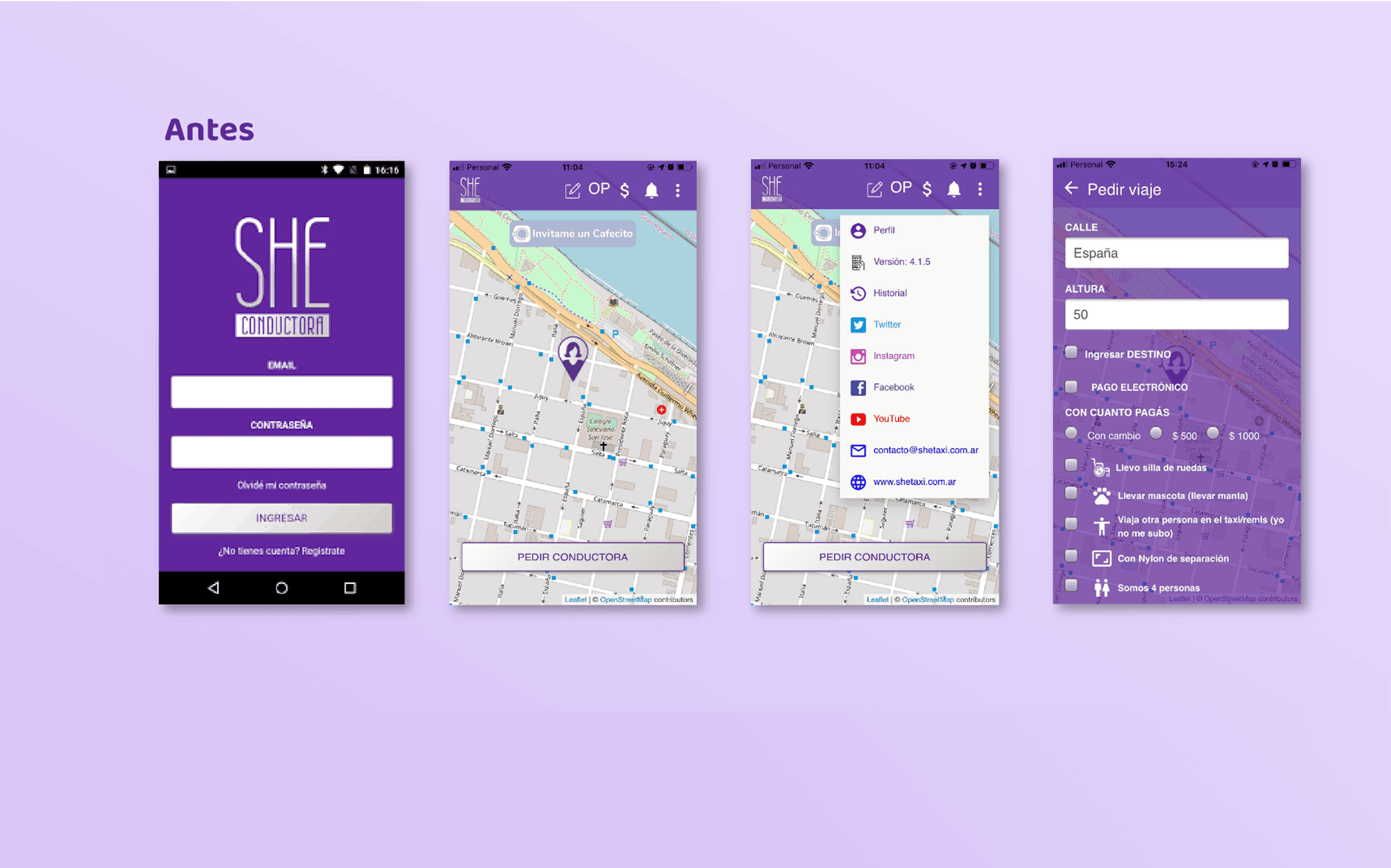
This project was developed in the context of a User-Centered Design training program, with the main challenge of redesigning an existing application. Over the course of several months, the project went through a research and analysis process that included various methodological tools. The data and decisions presented below are the result of that journey.
This project was developed in the context of a User-Centered Design training program, with the main challenge of redesigning an existing application. Over the course of several months, the project went through a research and analysis process that included various methodological tools. The data and decisions presented below are the result of that journey.
ABOUT SHE TAXI
ABOUT SHE TAXI
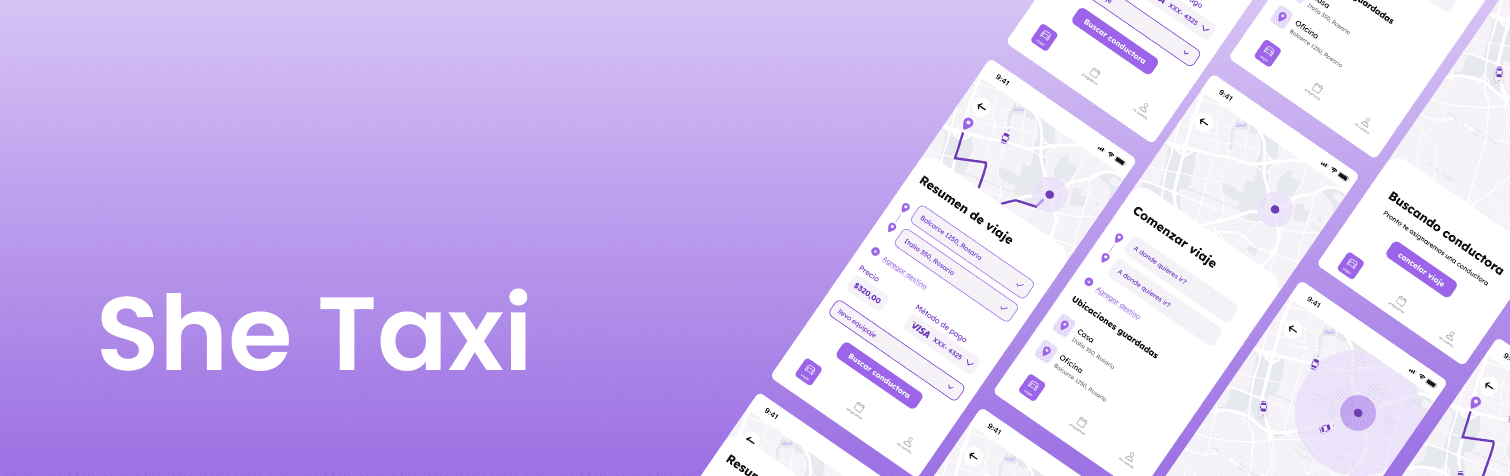
She Taxi is a transportation app that connects female passengers with female drivers, created with the aim of offering a safer and more reliable taxi service. The app operates in the city of Rosario and emerged as an alternative designed especially for women, prioritizing peace of mind, trust, and the overall travel experience.
She Taxi is a transportation app that connects female passengers with female drivers, created with the aim of offering a safer and more reliable taxi service. The app operates in the city of Rosario and emerged as an alternative designed especially for women, prioritizing peace of mind, trust, and the overall travel experience.
GOALS
GOALS
Although She Taxi is a relatively recent project, the application presents navigation and usability issues that hinder the user experience. The objective of this work is to understand the needs and motivations that lead users to use the app, as well as the difficulties they encounter while using it. The goal is to achieve a redesign aligned with users’ objectives in order to provide a more intuitive and satisfying experience.
Although She Taxi is a relatively recent project, the application presents navigation and usability issues that hinder the user experience. The objective of this work is to understand the needs and motivations that lead users to use the app, as well as the difficulties they encounter while using it. The goal is to achieve a redesign aligned with users’ objectives in order to provide a more intuitive and satisfying experience.
User research
INTERVIEWS
INTERVIEWS
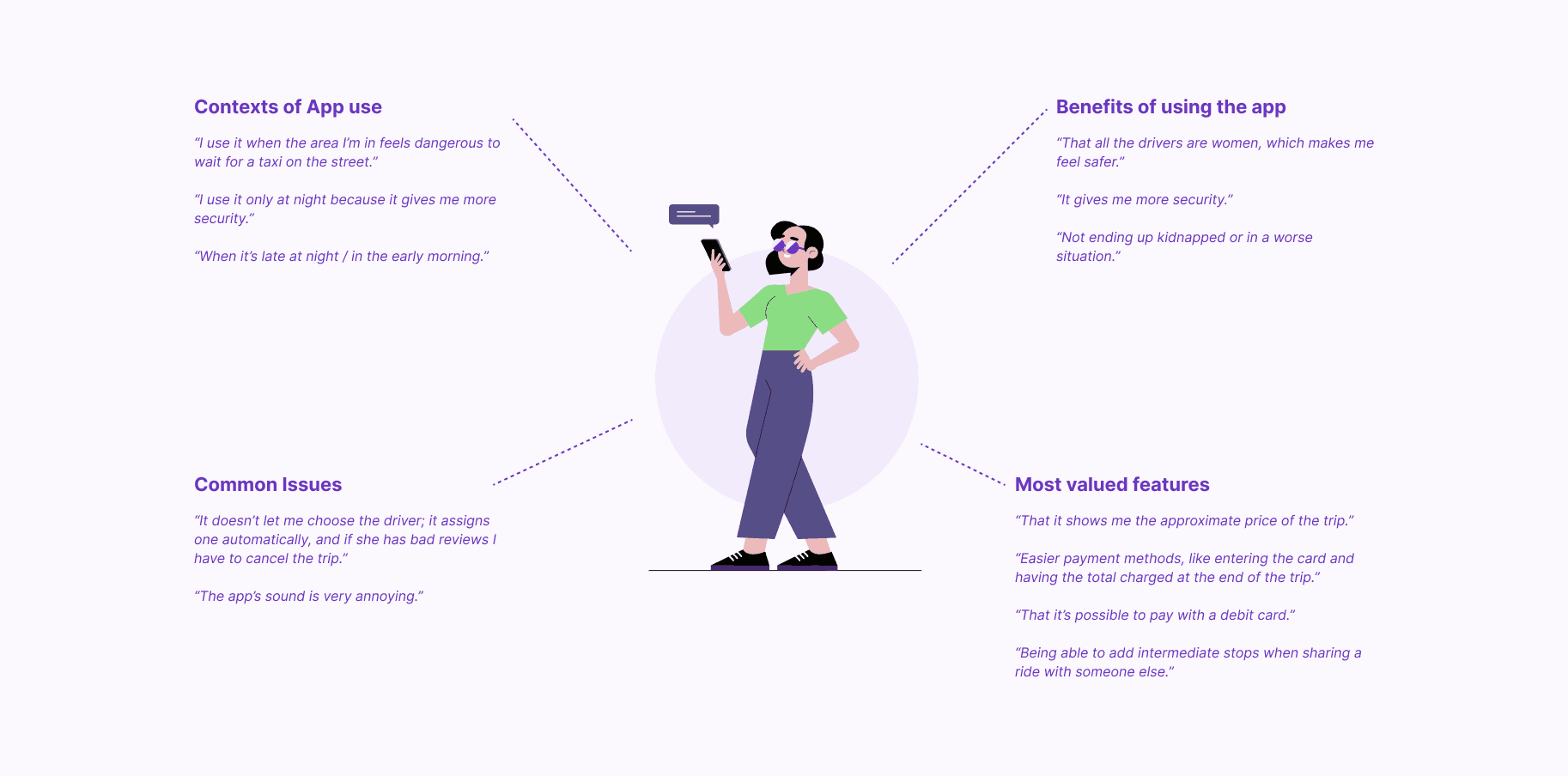
For this stage, in-depth semi-structured interviews were conducted with various users. The goal was to understand the contexts and situations in which the app is used, identify users’ experiences and difficulties, and uncover unmet needs.
Interviewee profile: Men and women between 17 and 50 years old who live in the city of Rosario and are active users of the application.
For this stage, in-depth semi-structured interviews were conducted with various users. The goal was to understand the contexts and situations in which the app is used, identify users’ experiences and difficulties, and uncover unmet needs.
Interviewee profile: Men and women between 17 and 50 years old who live in the city of Rosario and are active users of the application.

JOURNEY MAP
JOURNEY MAP
Based on the information gathered from the interviews, a Journey Map was created to identify pain points in the user experience.
This tool made it possible to systematically visualize users’ interactions with the application, highlighting moments of friction and opportunities for improvement.
From this analysis, the main pain points in the user experience were identified, along with potential areas for enhancement. These insights help to better understand the obstacles users face when interacting with the app and serve as a foundation for proposing design solutions.
Based on the information gathered from the interviews, a Journey Map was created to identify pain points in the user experience.
This tool made it possible to systematically visualize users’ interactions with the application, highlighting moments of friction and opportunities for improvement.
From this analysis, the main pain points in the user experience were identified, along with potential areas for enhancement. These insights help to better understand the obstacles users face when interacting with the app and serve as a foundation for proposing design solutions.


Information Architecture
ORGANIZE THE CONTENT
ORGANIZE THE CONTENT
Once the information was gathered and analyzed, the next step was to organize and structure the application’s content. To do this, an information architecture was developed to arrange elements in a coherent way and aligned with users’ needs.
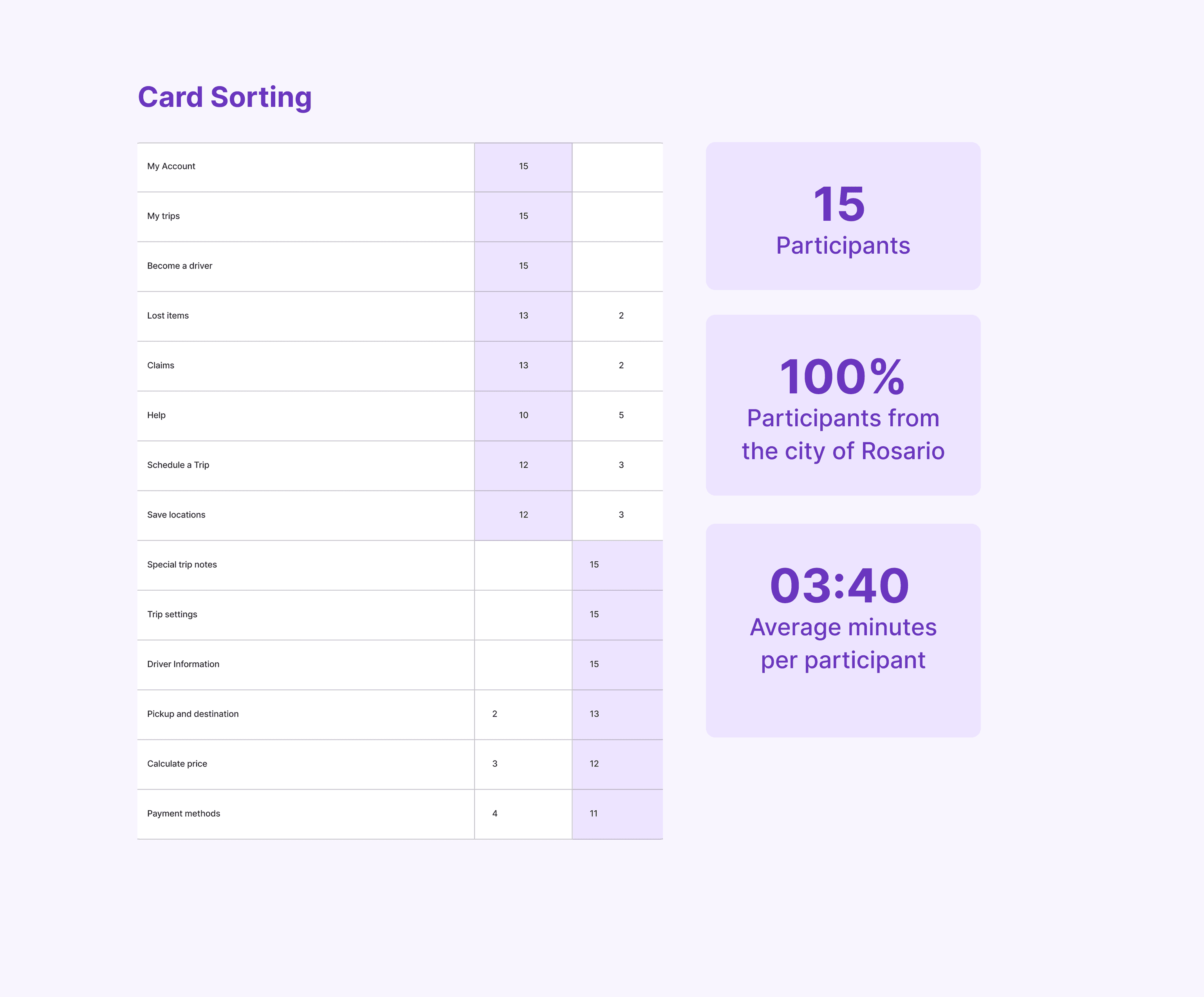
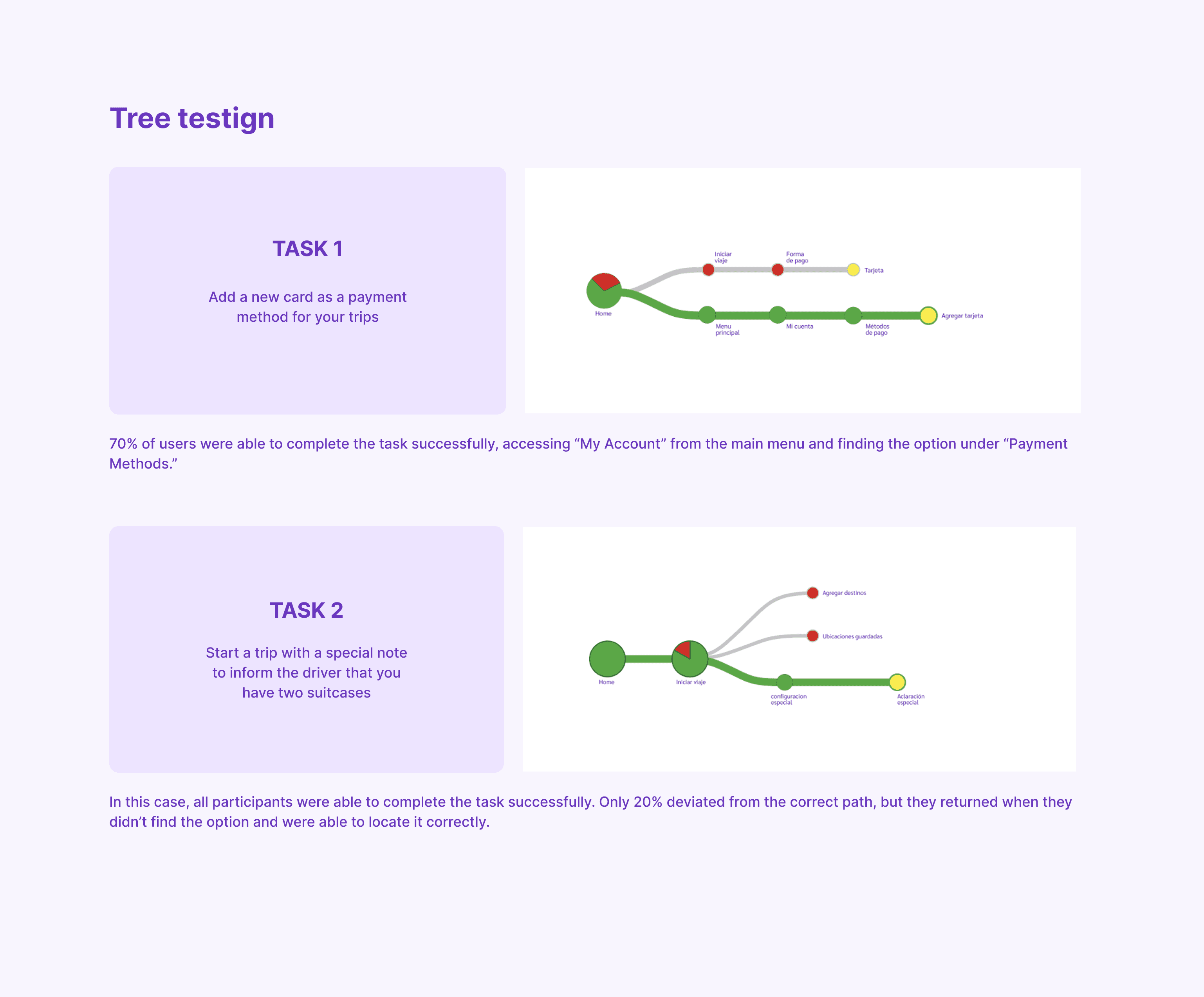
As part of this process, card sorting and tree testing activities were conducted—tools that helped validate the proposed organization and identify improvements in navigation and overall understanding of the app.
Once the information was gathered and analyzed, the next step was to organize and structure the application’s content. To do this, an information architecture was developed to arrange elements in a coherent way and aligned with users’ needs.
As part of this process, card sorting and tree testing activities were conducted—tools that helped validate the proposed organization and identify improvements in navigation and overall understanding of the app.
Navegation
DEFINE THE FLOWS
DEFINE THE FLOWS
During the stage of defining navigation and task flows, the focus was on understanding and designing the paths users need to take to achieve their goals within the application.
To do this, task flows and wireflows were developed—tools that allowed for a step-by-step visualization of the actions required for each task, helped identify potential points of friction, and ensured a smoother, clearer, and more intuitive user experience within the app.
During the stage of defining navigation and task flows, the focus was on understanding and designing the paths users need to take to achieve their goals within the application.
To do this, task flows and wireflows were developed—tools that allowed for a step-by-step visualization of the actions required for each task, helped identify potential points of friction, and ensured a smoother, clearer, and more intuitive user experience within the app.

Interface design
RE-DESIGN
RE-DESIGN
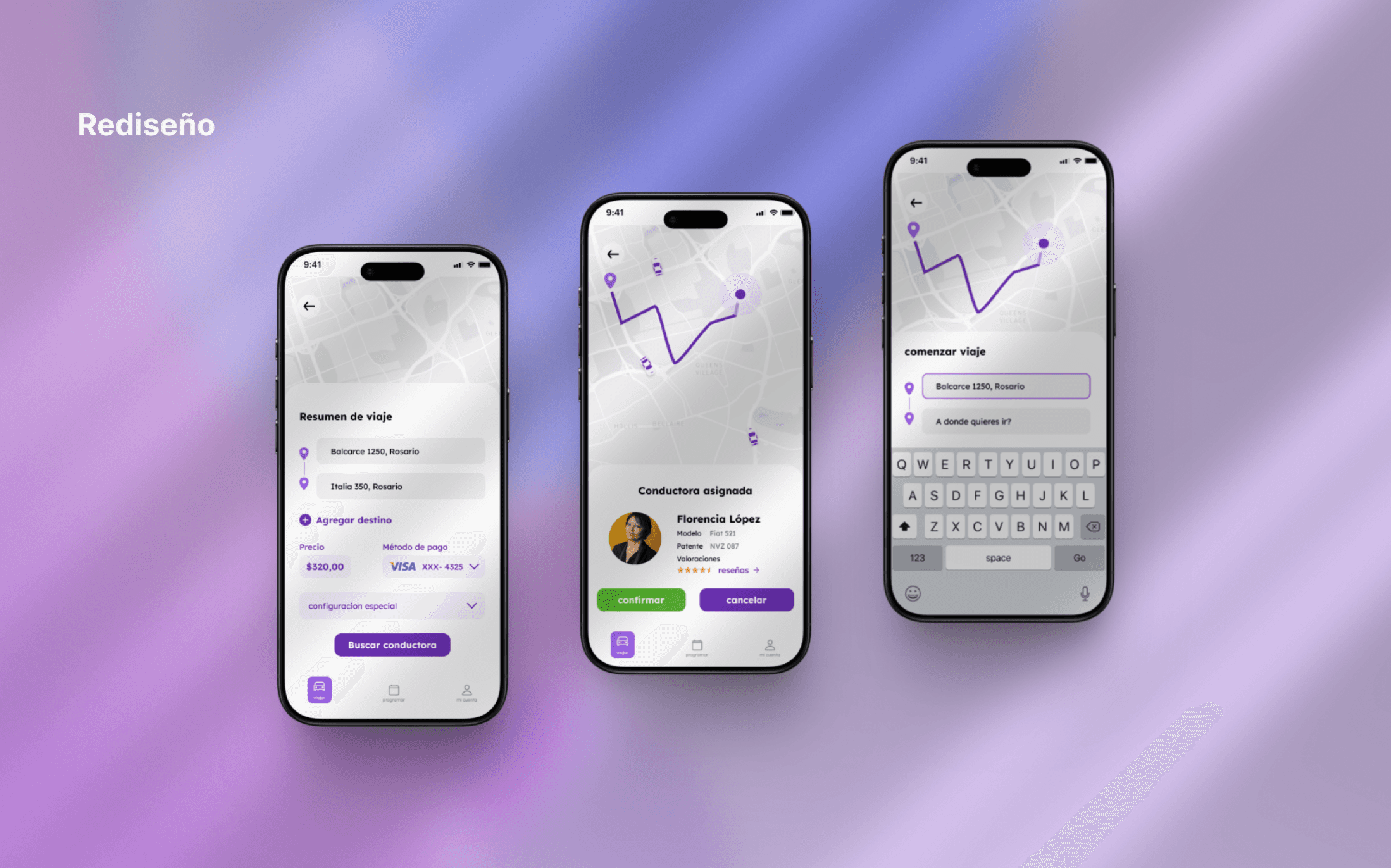
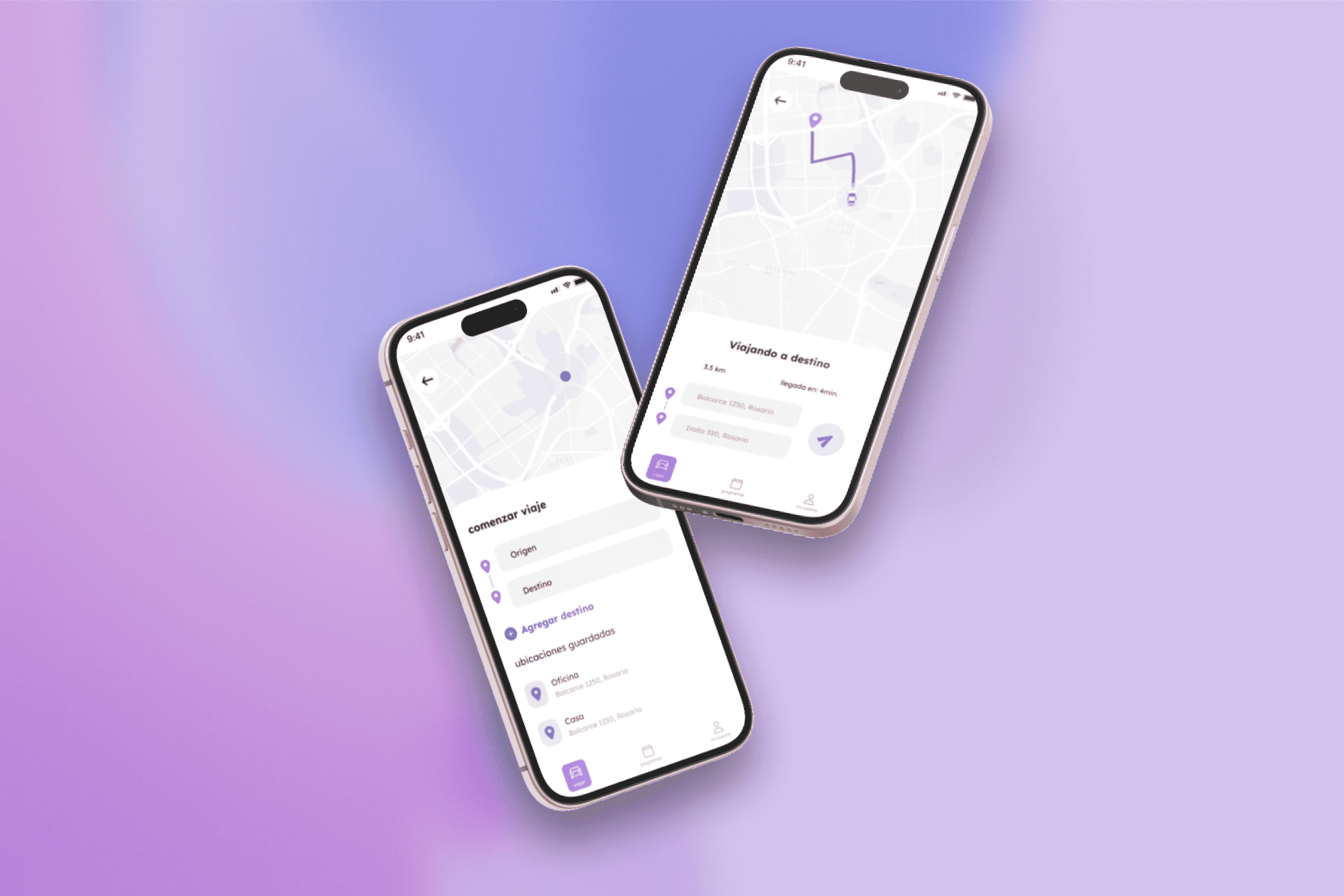
Once the research was completed, the information architecture defined, and the task flows established, work began on the wireframes. Initially, low-fidelity wireframes were created to explore and validate the structure and layout of the content.
Through successive iterations, the process progressed to higher-fidelity prototypes, which allowed for refining the experience and moving closer to the final solution for the redesign.
Once the research was completed, the information architecture defined, and the task flows established, work began on the wireframes. Initially, low-fidelity wireframes were created to explore and validate the structure and layout of the content.
Through successive iterations, the process progressed to higher-fidelity prototypes, which allowed for refining the experience and moving closer to the final solution for the redesign.



Get in touch
mail: ruizrocio.e@gmail.com
Get in touch
mail: ruizrocio.e@gmail.com