About project
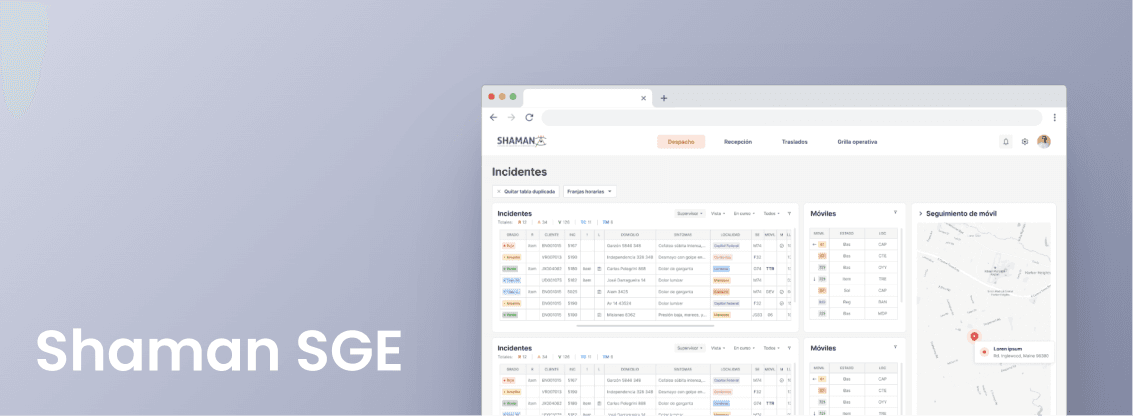
Shaman SGE is a medical emergency management system used by operators and dispatchers to handle incidents, coordinate vehicles, and monitor cases in real time. For this project, I worked as a freelance designer, specifically contracted for the redesign and adaptation of the system to its web version.
Shaman SGE is a desktop-installed system used by operators for managing medical emergencies. The original system was designed for installable environments and had limitations in terms of updates, scalability, and user experience.
The project aimed to migrate the system to a web platform and redesign its interface to improve readability, operational efficiency, and visual consistency, while maintaining the core workflows already adopted by the operational teams.
First steps
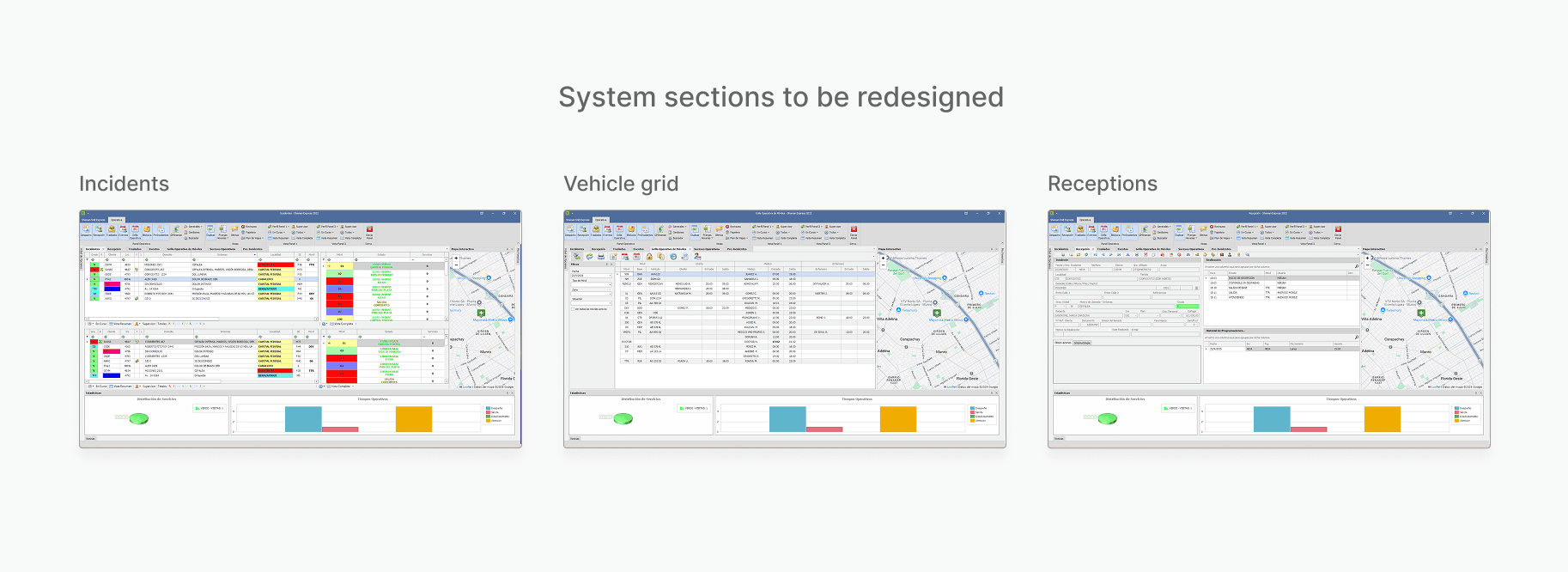
As a starting point, an interview was conducted with the client to gain a deeper understanding of the sections that needed to be redesigned. During this session, emphasis was placed on understanding which elements and tools these screens currently offer and how they are used in daily operations.
Additionally, the main function of the user in each section was analyzed, along with their objectives and the tasks they need to perform. Based on this information, user workflows were mapped for each section, serving as the foundation to guide the redesign according to real operational needs.
For this project, no direct research with end users was conducted, as the client defined the scope and working methods. Since the project was carried out freelance and externally to the team, the research was primarily based on the information, definitions, and validations provided by the client.
Proposals for web adaptation
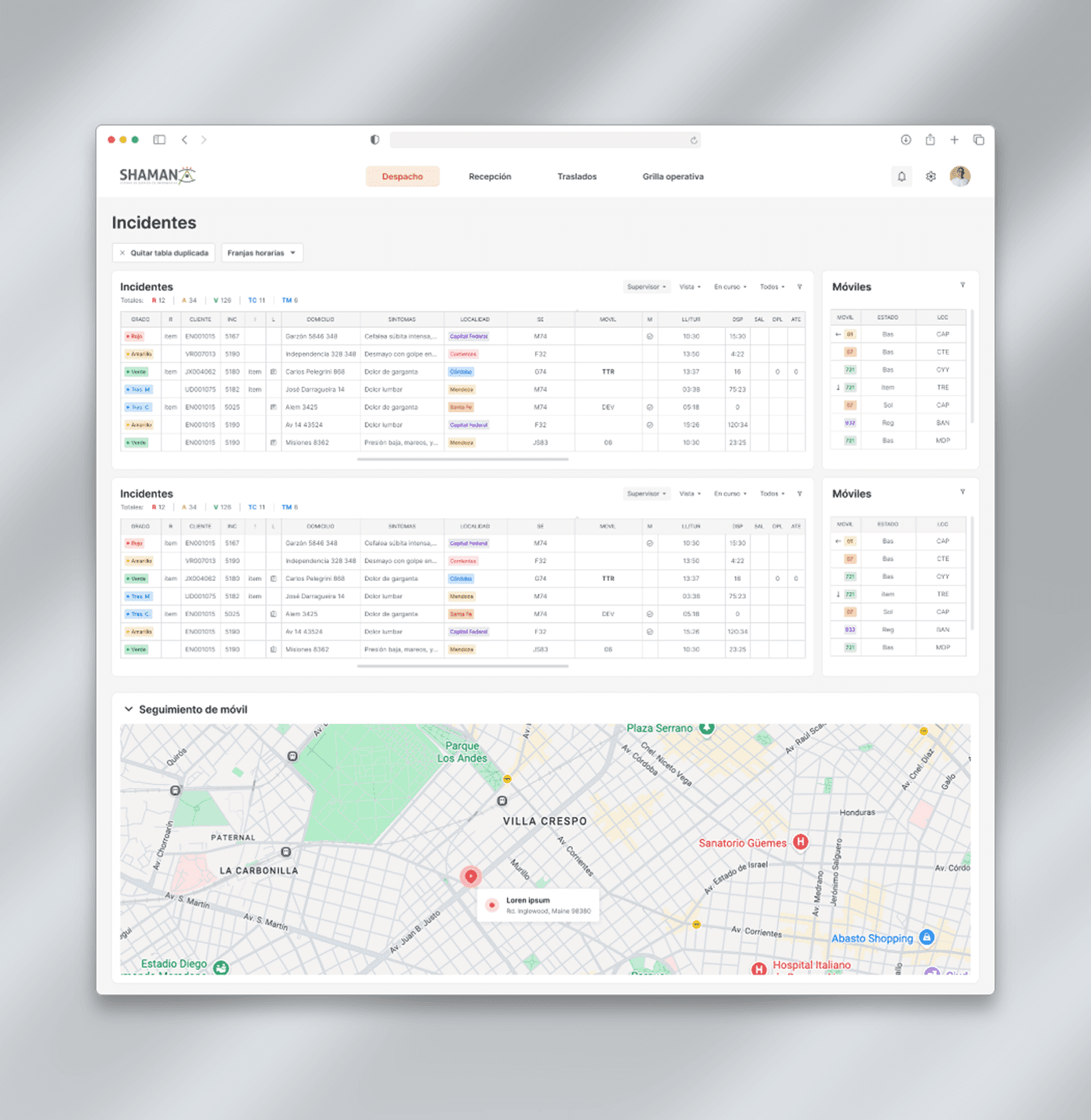
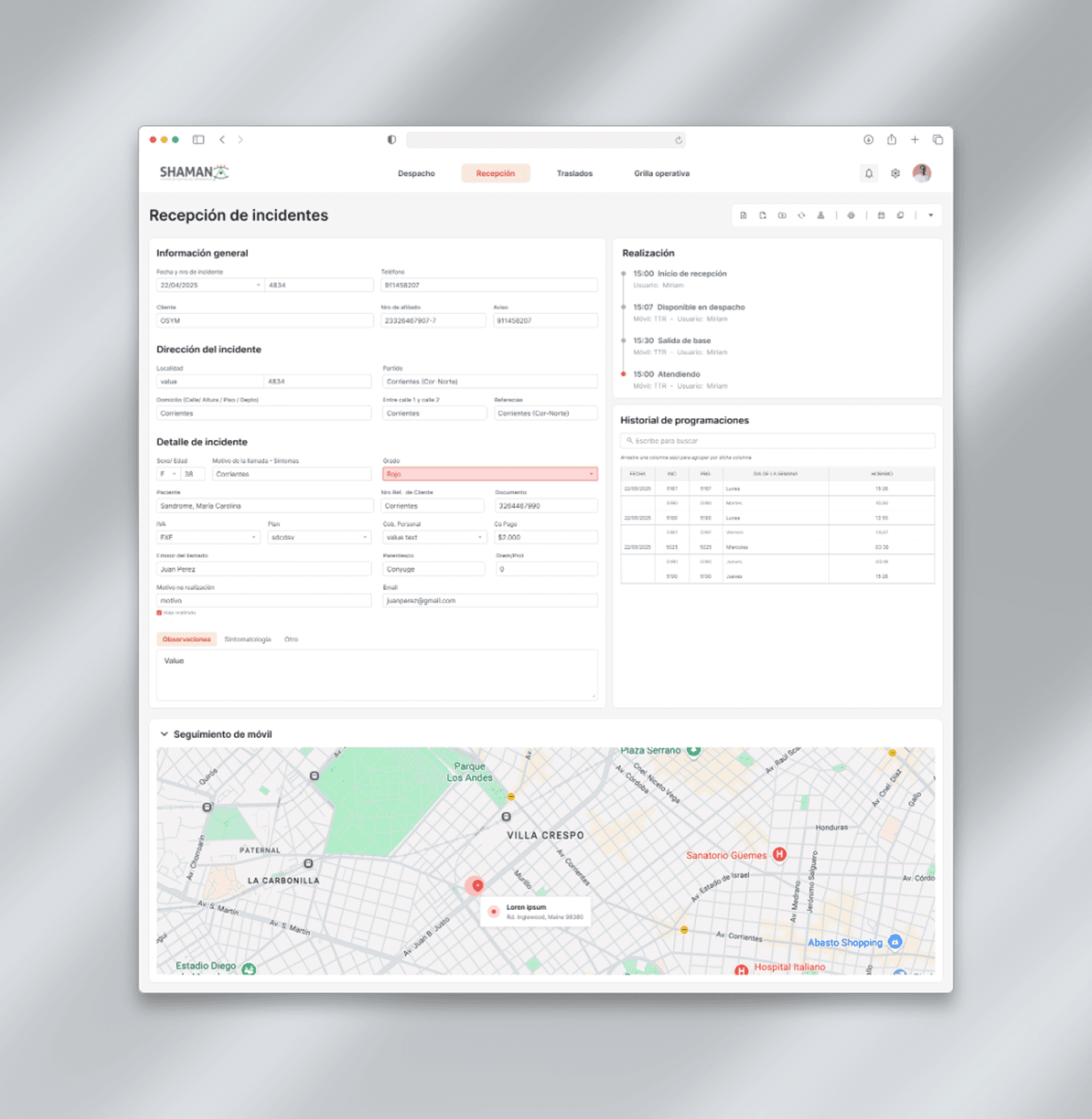
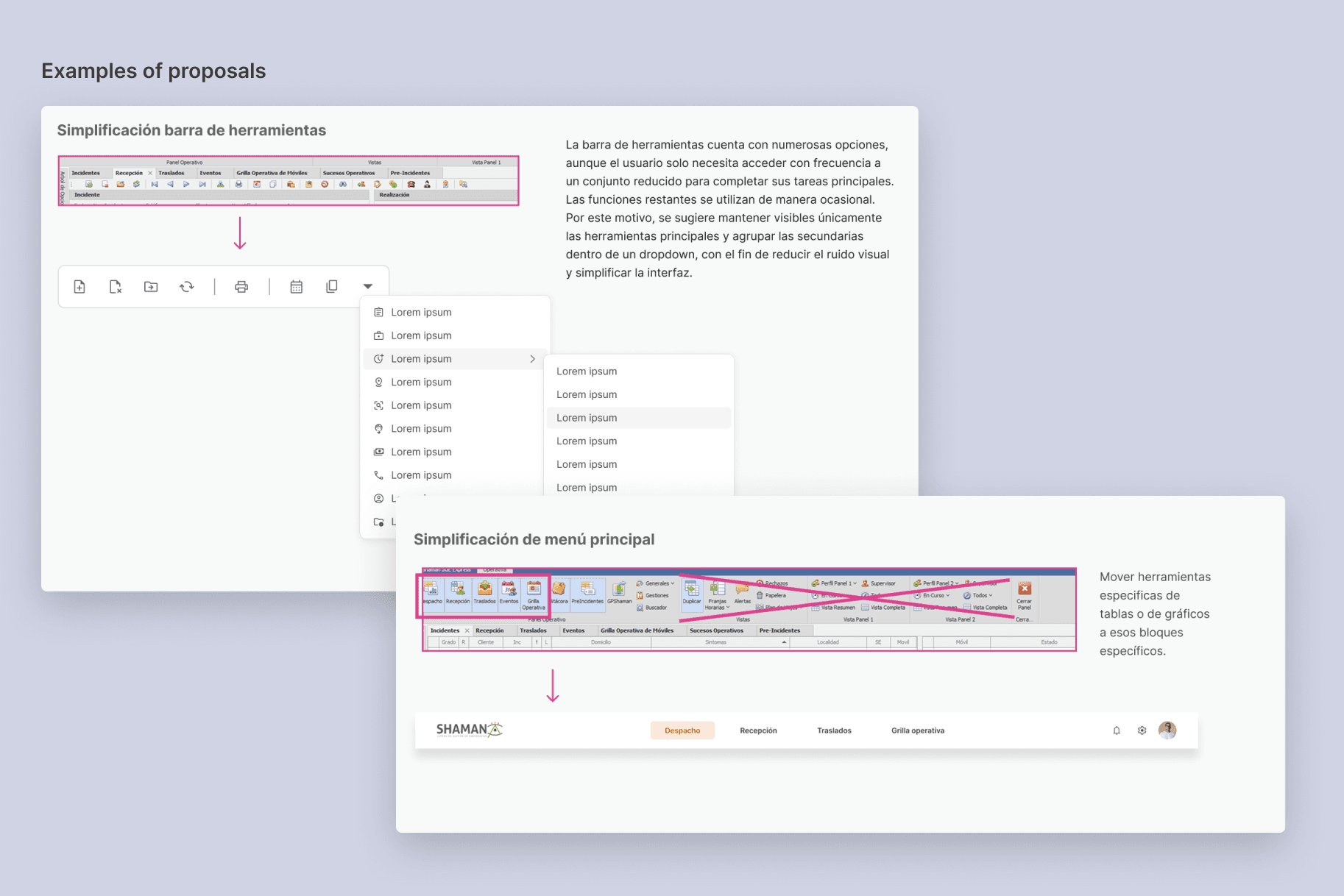
Based on the analysis of the original screens and the workflows provided by the client, specific proposals were developed for each of the sections to be redesigned. During this process, it was identified that, when adapting the system to a web version, each screen contained an excessive number of tools and actions (both primary and secondary), which created visual overload.
It was proposed to the client to prioritize the essential tools that users need to achieve their main objectives in each section, keeping secondary elements and tools hidden or in the background. The possibility of minimizing or collapsing blocks of secondary information was also suggested to reduce workspace clutter.
The goal of these decisions was to allow users to focus on the primary function and their priority workflow, avoiding distractions and visual noise in an operational context where speed and clarity are essential.
Validation of changes and proposals with the client
The proposed changes were presented and the design guidelines for each section were validated, always taking into account the objectives and tasks that users need to accomplish on each screen.
Proposals identified by the client as potentially problematic, either due to technical implementation challenges or their impact on existing workflows with current users, were also considered. In these cases, an iterative approach was used, adjusting and refining solutions based on client feedback to generate new design proposals.
With the proposals validated, it was possible to move forward to the UI design stage for the different sections, blocks, and components of the system.
Interface design
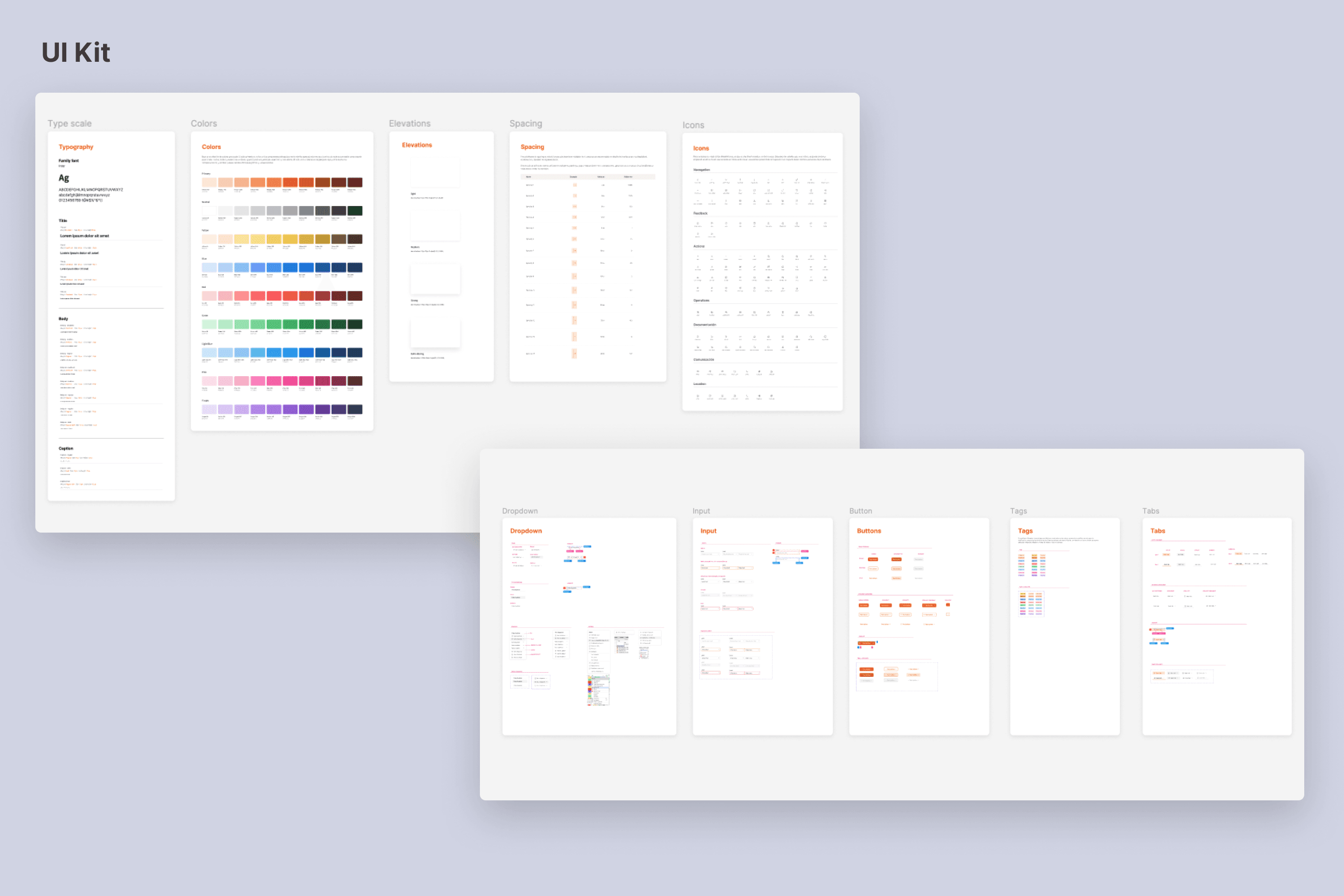
Once the proposals were validated with the client, work proceeded with the UI design and the creation of the necessary prototypes for each section of the system. The client did not have any existing UI elements or design system, so in this initial stage a basic UI Kit was developed to allow for scalability and ensure consistency across all screens.
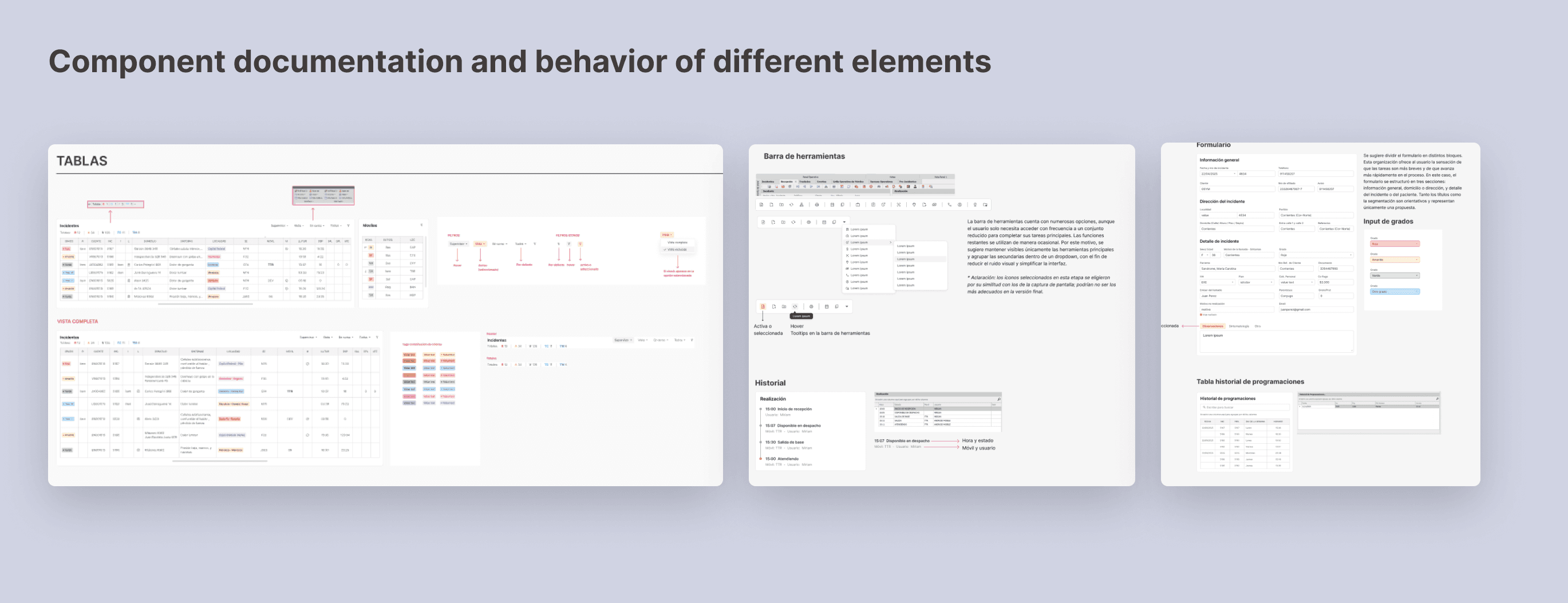
General components were designed, prioritizing those that would be most reused across different sections, and documenting their behavior and various possible states.
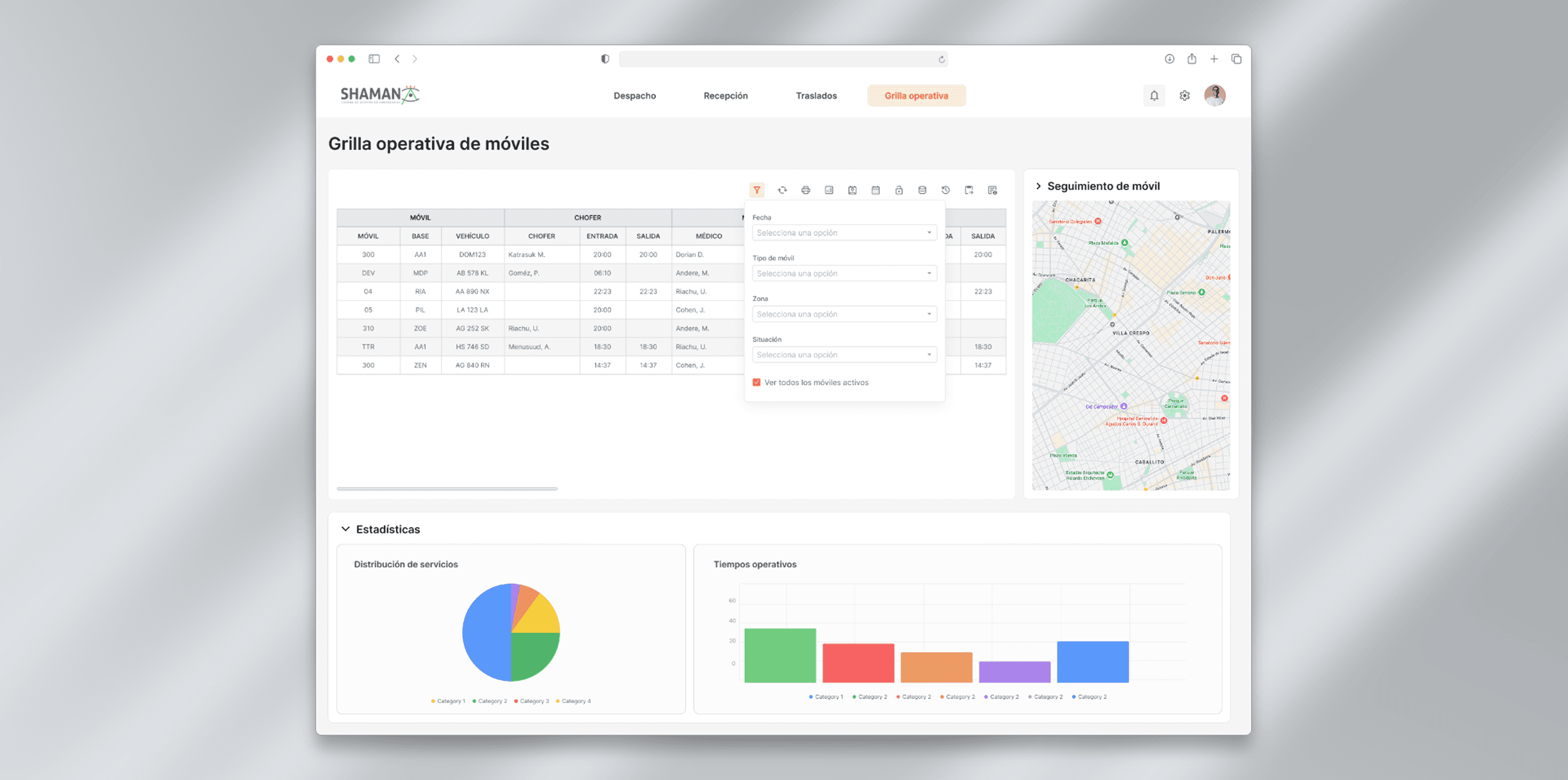
Additionally, tables, charts, and the behavior of different information blocks within each section were designed and documented, ensuring that the interface is clear, coherent, and functional for users in their daily workflows.
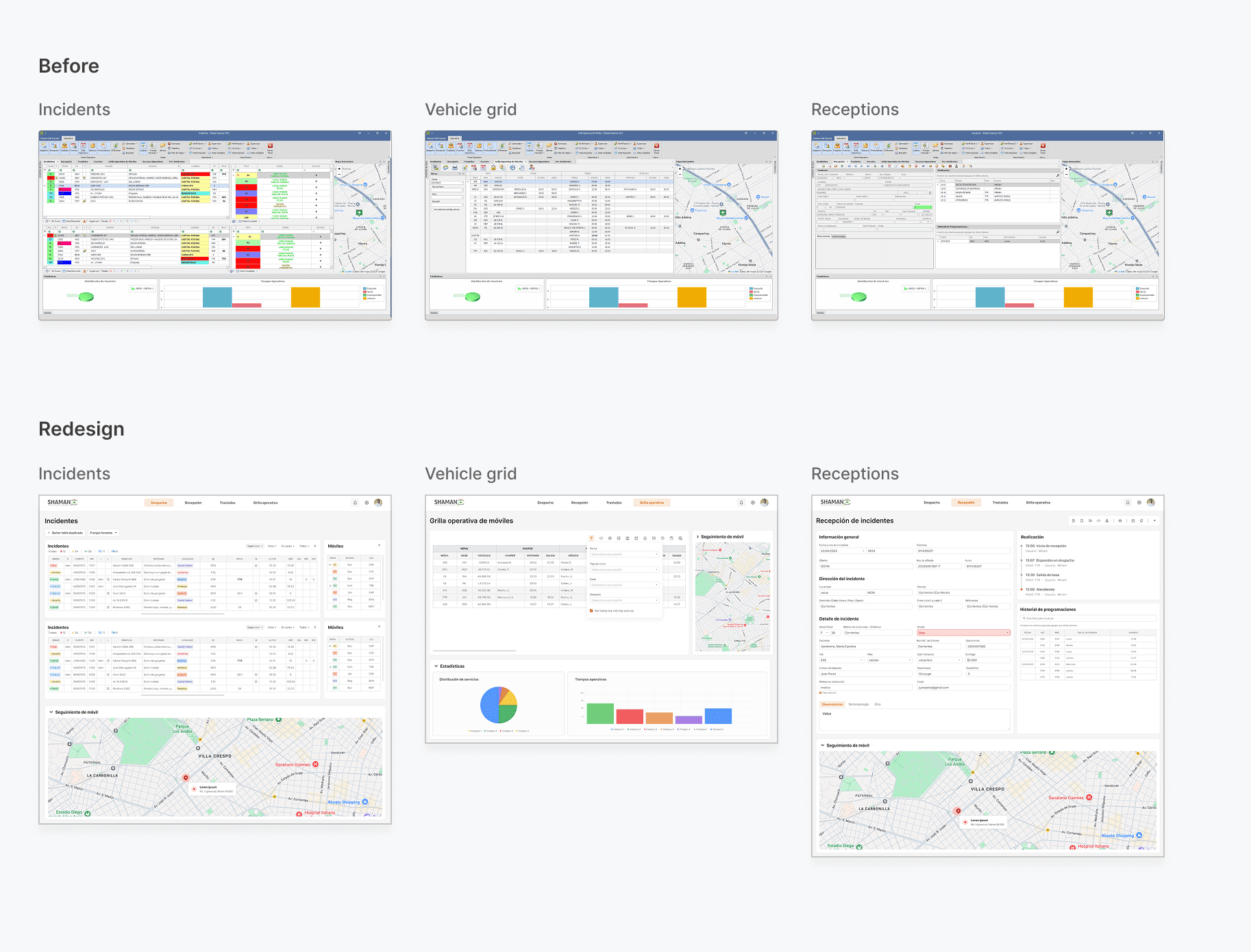
Final Presentation
The client was provided with a presentation of the redesign for the different sections of the system, along with the complete design and documentation of the behavior of the various interface elements. In addition, the UI Kit developed for the project and the component documentation were delivered, providing a clear foundation for development and for future iterations or expansions of the system.