AI Built•2026
Website & CMS
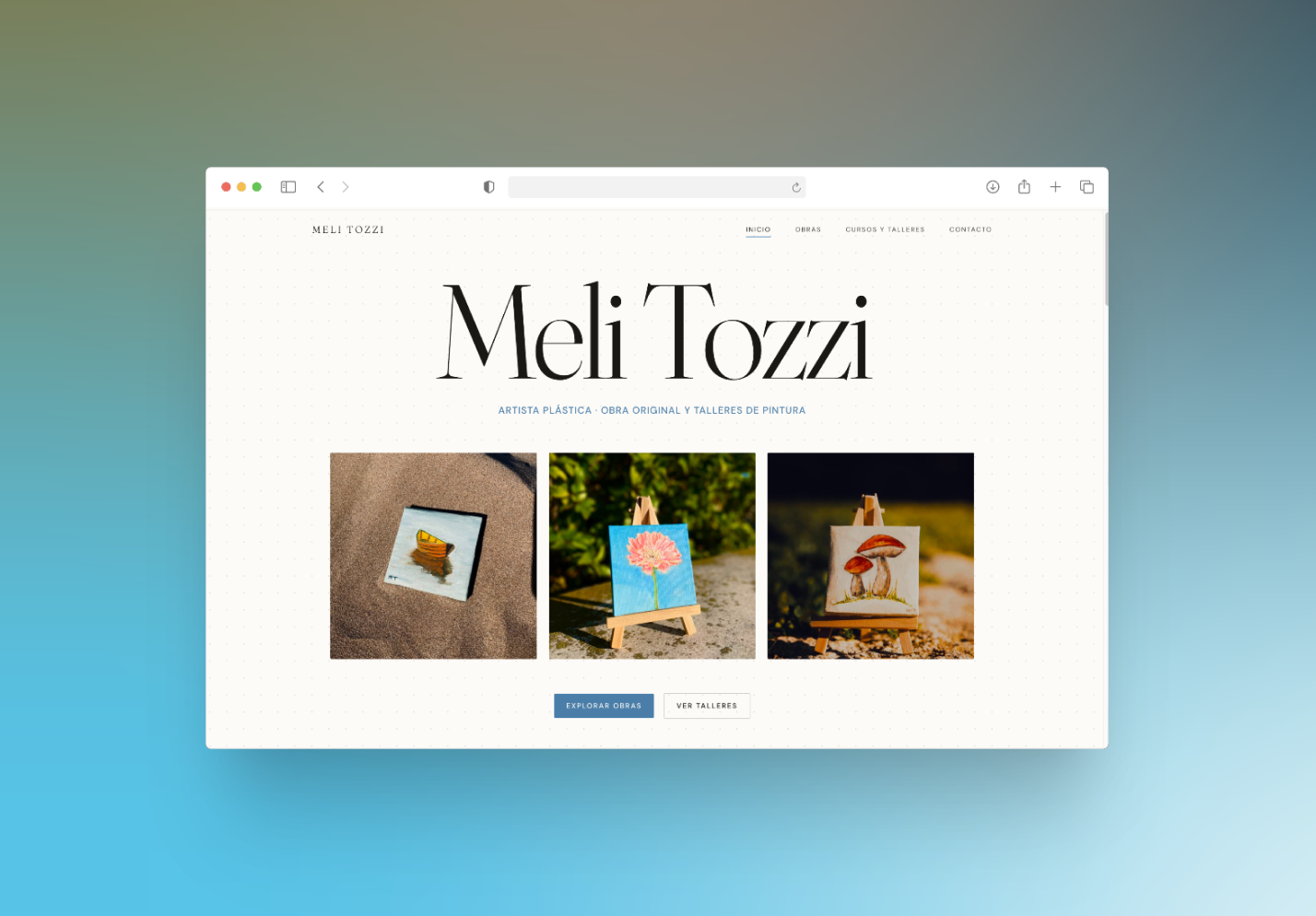
This personal project grew out of a need for a friend—a visual artist and entrepreneur looking to professionalize her digital presence. It served as an opportunity to explore end-to-end product development using AI tools. The result is a website with a custom content management system that allows her to showcase her art portfolio, promote workshops, and manage content autonomously.
Tools
Lovable + Cursor + Supabase
First steps
I started by defining the project requirements in a PRD to structure both the public website and the content management system. Broadly speaking, the system needed to:
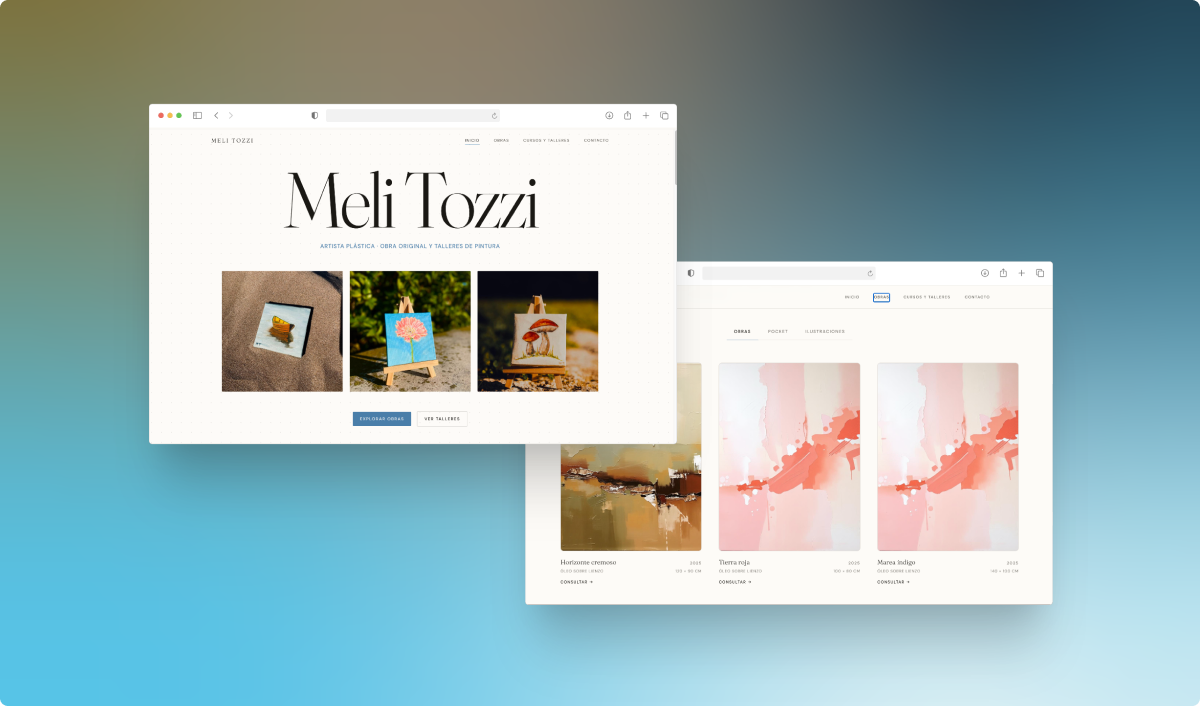
- Display the portfolio of artwork and available workshops.
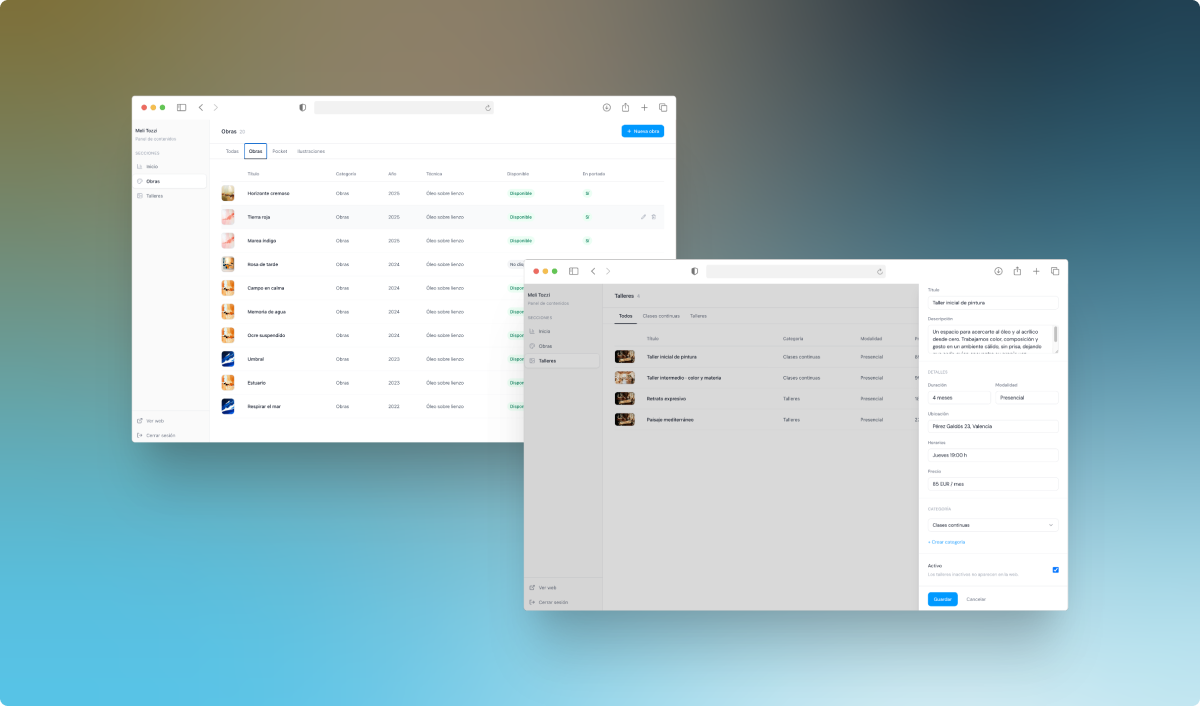
- Manage this content (create, edit, delete) autonomously.
- Drive conversions through direct inquiries, bookings, or sales.
With this foundation in place, I created the initial low-fidelity wireframes in Figma before moving on to the first visual prototypes in Lovable.
Implementation
With the PRD and wireframes ready, I used Cursor's Plan mode to break down the execution into documented stages, ensuring structured progress. To maintain project consistency, I defined three key components:
- Communication rules: Jargon-free explanations and required prior confirmation for design or database decisions.
- Context file: A document tracking the current state to resume work in a new chat without losing context.
- Update skill: Instructions for the agent to update the project memory on command.
Tech stack
- Frontend: TanStack Start, React 19, Vite, Tailwind CSS, and shadcn/ui.
- Backend & DB: Supabase (Postgres, image storage, and admin authentication).
- Email & Deployment: Resend for forms and Vercel for deployment.
Development was executed in two phases: first, the public website with its database; then, the content management system featuring login, catalog administration, and analytics.
Learnings
- The PRD as an anchor: Defining needs and structure prior to implementation prevented ad-hoc decisions and ensured a structured, phased rollout.
- AI as a copilot: Using Lovable for rapid prototyping and Cursor for development, while retaining full control over all product decisions.
- Context management: The documentation system and custom skills made it possible to pause and resume the project across sessions without losing context.