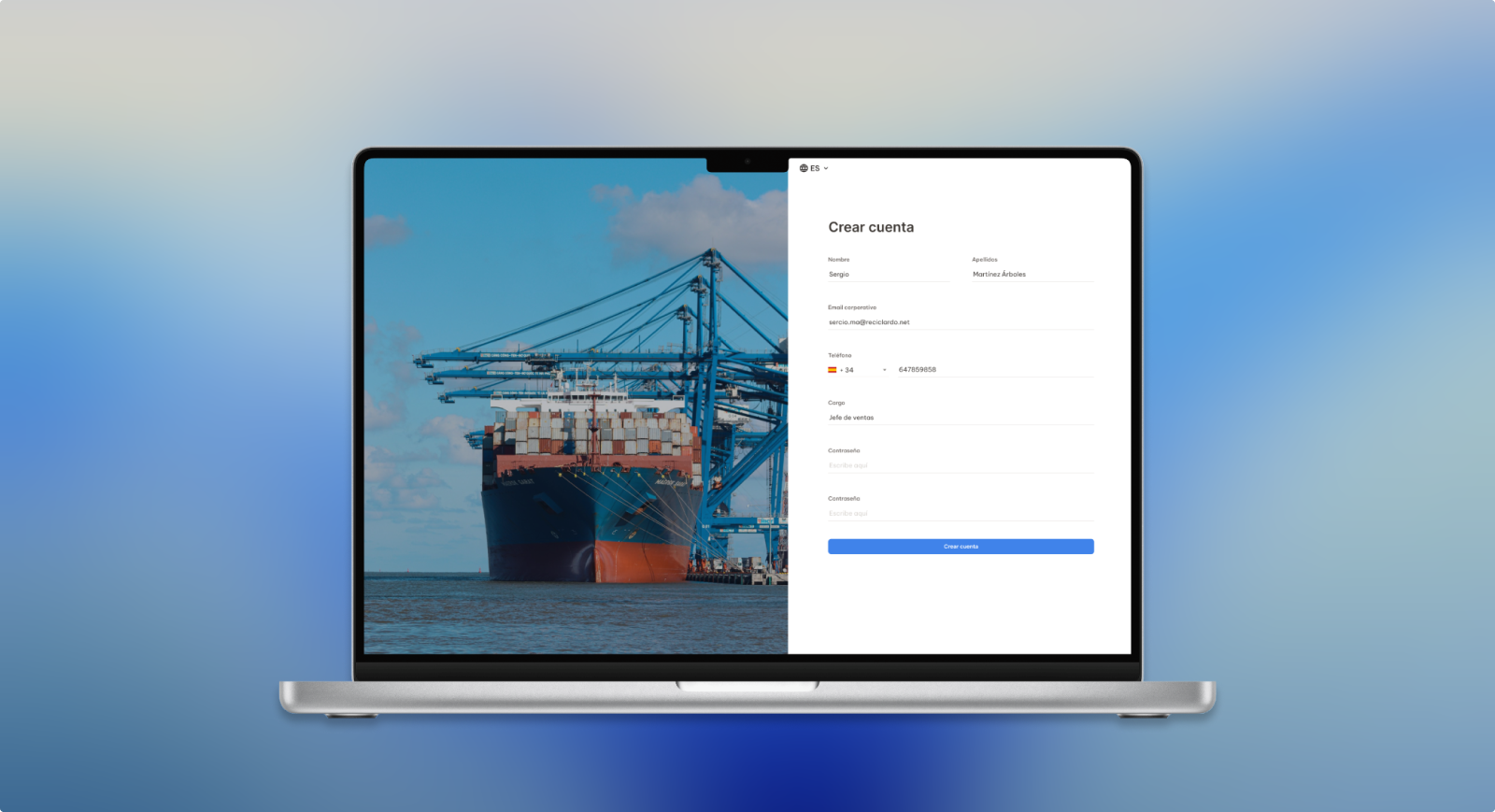
Aapresid • 2020
Aapresid Congress
Every year, the Aapresid Congress brings together over 5,000 agtech and agribusiness leaders. In 2020, the in-person event scheduled for August was canceled due to the pandemic. In under five months, we had to digitize the entire experience without compromising on reach, quality, or commercial commitments.
As the sole UX Analyst, I led the web platform design, collaborating closely with the content and commercial teams while coordinating with external development and streaming vendors.
Role
UX Analyst
Timeline
2020
Company
Aapresid

First steps
Discovery and scope definition
The first step was mapping the project's critical needs across three key areas:
- Sponsors and Commercial: Guaranteeing visibility and interaction spaces to honor commercial commitments.
- Content and Speakers: Coordinating concurrent tracks, schedules, and remote speaker participation.
- Administrative Management: Centralizing registrations, ticketing, access control, and live streaming.
With only a five-month window, fully custom development was out of the question. We opted for a hybrid solution: integrating a third-party tool to ensure stable streaming and room management, while focusing custom development on the onboarding experience and commercial value.
Initial Proposals
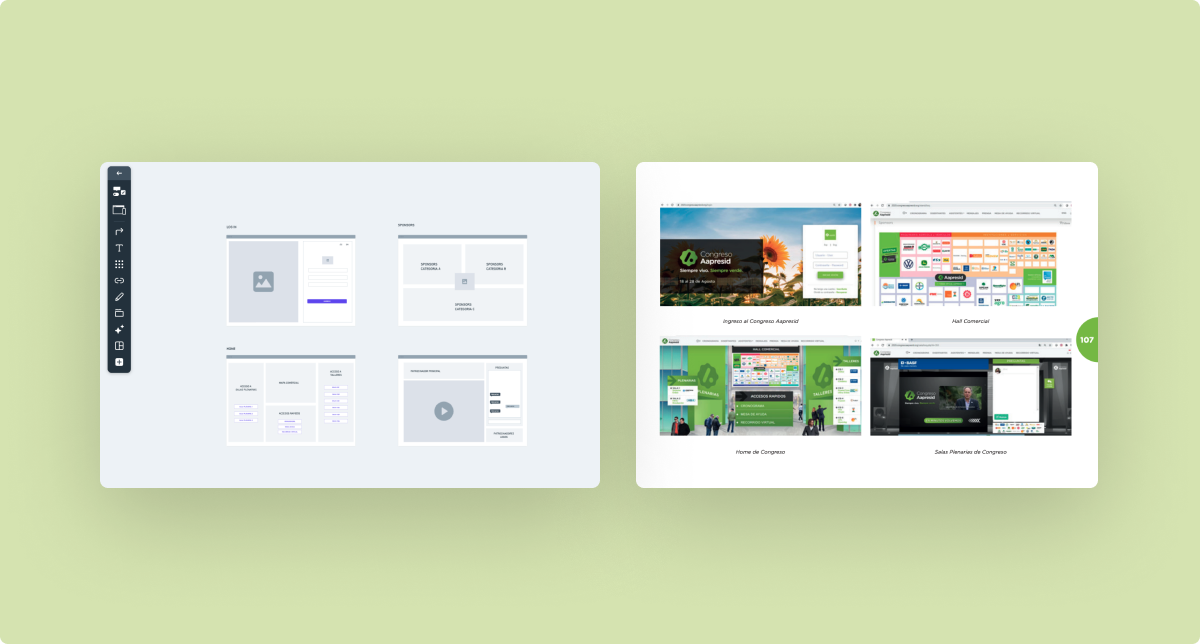
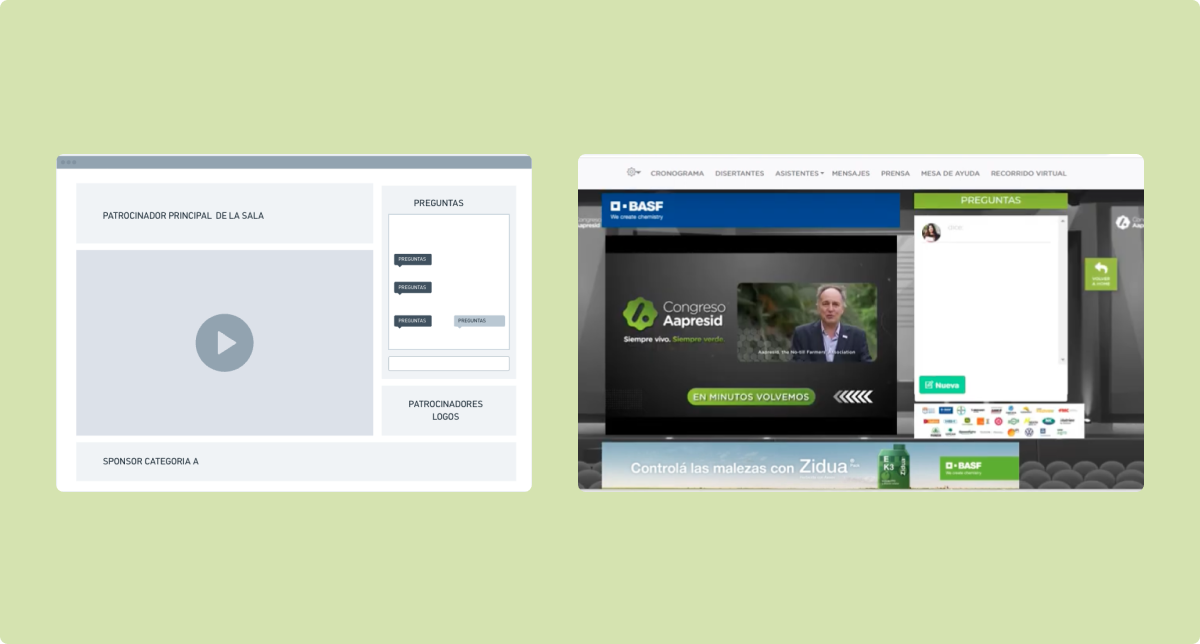
We designed three rounds of wireframes to quickly validate user flows and priorities before moving to UI design and development. During this phase, we tackled two key challenges:
- Sponsor Visibility: Ensuring a clear brand presence and meaningful engagement opportunities within the platform.
- Bringing the In-Person Experience Online: Replicating physical event dynamics, including audience participation, Q&A with moderators, slide sharing, and multi-speaker sessions.
Validating these flows with the commercial and content teams allowed us to quickly align criteria and build on a solid foundation.
Key features
We structured the platform around three key user roles to tailor the experience to their specific goals:
- Attendees: Seamless registration, centralized access to the agenda, workshops, and keynotes, plus spaces to join discussions and ask moderators questions. We also included a company/speaker search and a live support module.
- Sponsors: Strategic visibility across conference rooms, dedicated microsites to showcase products, and networking tools to connect directly with attendees.
- Speakers: Frictionless access, presentation upload tools, and a real-time Q&A panel to interact with the audience during their sessions.
Design under pressure
Designing with only a five-month margin and an unmovable date completely changed our decision-making process. The first major challenge was creating a seamless experience across two different systems. We had to connect our custom-built platform—designed specifically to give sponsors high visibility—with the external streaming tool. The goal was for attendees to navigate between the conferences and the commercial stands without noticing they were jumping from one system to another.
The second critical moment was the speakers' experience. The content team detected that the technical friction of the digital environment could become a real operational problem during the event. To mitigate this, we simplified the access flow to the absolute minimum and designed a step-by-step preparation guide. Although it was not part of the original scope, it was vital to ensure the event flowed without interruptions.
Coordination with other departments
Aligning the proposal with the administration, finance, and member support teams revealed a new challenge: processes that flowed informally in person now required explicit digital design.
The clearest example was member support. At the physical event, inquiries were resolved instantly at a booth. To maintain that immediacy in the digital environment, we designed a dedicated module with key information and a live chat, replicating the proximity of face-to-face interactions throughout the event.
Furthermore, coordination with the speakers and the streaming team drove critical interface improvements: we adjusted room access times, designed status messages for waiting periods, and optimized how attendees were notified about last-minute changes.
Results and impact
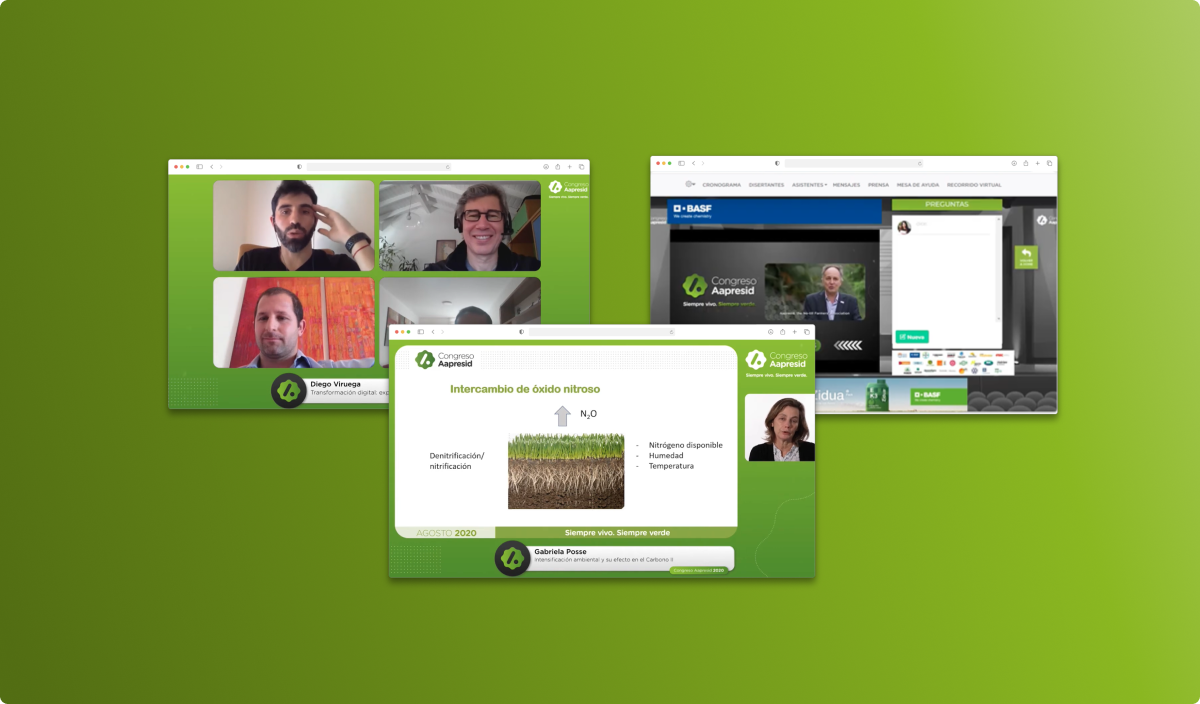
The Aapresid 2020 Congress took place over 9 days divided into two weeks: Networking Week from August 18 to 21, and Knowledge Week from August 24 to 28. With 8 simultaneous rooms per day, the event brought together 11,500 registrants, doubling the historical figures of the in-person format, and reached up to 20,000 concurrent attendees.
Going virtual allowed us to break geographic barriers in a way the in-person format never had before: 552 speakers participated, 95 of whom were international—a record number facilitated by the elimination of travel costs. In total, 365 talks and workshops were delivered.
Beyond the numbers, the organization's assessment was definitive: the board of directors described the event as an absolute success and highlighted that many of the digital components would be permanently adopted.
Learnings
Working under such a tight deadline forced us to prioritize aggressively. Initially, we focused almost exclusively on the technical viability of streaming and meeting sponsor demands.
However, the biggest takeaway was organizational: we should have involved administration, finance, and member support right from the discovery phase. Leaving them out early on made us overlook how much of the in-person event relied on their operational management. Bringing them in from day one would have allowed us to spot user-facing friction early—friction that wasn't visible from a strictly technical or commercial standpoint.